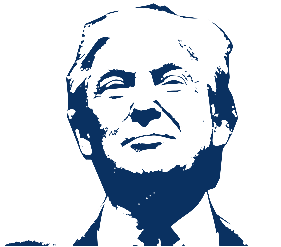
Tom Homan
Director of Immigration and Customs Enforcement (ICE)
Tom Homan, acting director of ICE and current border czar, is a key contributor to the hard‑right Project 2025 agenda. Homan has pushed ICE into legally murky territory—expanding deportations to include people who have not committed crimes, ramping up “collateral arrests” in sanctuary cities, and even floating prosecutions of local Democratic leaders who defy federal policies. Notably, he was a driving force behind the Trump-era “zero tolerance” policy that separated thousands of parents and children at the border. Homan has repeatedly vowed to go after sanctuary-city officials, smirking to reporters, “Wait till you see what’s coming,” as he threatened to arrest mayors and governors who refuse cooperation

Homan drafted policies that separate children from their parents at the border.
Zero Tolerance
Donald Trump has rehired Tom Homan, a key figure behind the widely condemned "zero tolerance" family separation policy, to lead immigration and border enforcement in his next administration. Homan will oversee all aspects of border security and help carry out Trump’s plan for mass deportations, potentially invoking the 1798 Alien Enemies Act—a law last used during WWII for Japanese internment.
Family Separations
Homan has openly supported reviving family separations, saying the tactic “needs to be considered.” He has also aligned with groups that promote framing immigration as an “invasion,” and has advocated for empowering states to act as federal immigration enforcers. Critics argue his views and proposals are extreme, unconstitutional, and part of a broader plan to radically reshape immigration enforcement in a second Trump term.
Tom Homan contributed to Project 2025.
Donald Trump brought back Tom Homan—a key contributor to Project 2025. Homan, who previously led ICE and enforced the controversial family separation policy, helped shape the Project 2025 plan developed by the Heritage Foundation. That nearly 900-page document outlines sweeping proposals for a future Republican administration, including mass deportations, dismantling federal agencies, and replacing civil servants with party loyalists.
Homan contributed specifically to the immigration section of Project 2025, which promotes large-scale detention and deportation of undocumented immigrants. Despite public backlash, he has doubled down on the family separation policy, stating, “I don’t give a s***… we enforced the law.”
Homan ignored judges' orders for illegal border flights.
Tom Homan, the Trump administration's border czar, publicly dismissed concerns over a federal judge's order to halt deportation flights of Venezuelan gang members, including members of the Tren de Aragua (TdA) gang. On "Fox & Friends," Homan stated, "I don’t care what the judges think" about the deportations, expressing defiance toward the court's intervention.
The legal battle began when a federal judge expanded a temporary block on deportations and verbally ordered that a plane carrying nearly 300 TdA members should not leave the U.S. However, Homan claimed the plane had already left U.S. jurisdiction and was in international waters by the time the judge issued the order. He argued that the judge’s decision to potentially return the flight was illogical, questioning why anyone would want to bring "terrorists" back to the U.S.
Homan defended the administration’s actions, emphasizing that President Trump had invoked the Alien Enemies Act to remove violent criminals like TdA and MS-13 gang members from the country, which he argued made the U.S. safer.
Homan allows ICE agents in churches and schools.
Trump Revoked ICE Directive
President Donald Trump revoked a directive that had previously barred Immigration and Customs Enforcement (ICE) and Customs and Border Patrol (CBP) officers from making arrests in "sensitive" areas such as schools and churches. The 2011 policy had protected these locations, along with hospitals, funerals, weddings, and public demonstrations, from immigration enforcement actions.
ICE can Target Schools and Churches
With the rollback, ICE and CBP agents are now authorized to target schools and houses of worship, as well as conduct raids near courthouses. The Department of Homeland Security emphasized that law enforcement would use "common sense" in these actions, aiming to catch criminal immigrants, including those with violent offenses like murder or rape.
ICE and Courthouses
In addition, ICE can now operate near courthouses, although they are instructed to avoid non-criminal court proceedings such as family or small claims court. The change also includes a shift in terminology, with individuals arrested for immigration violations now being referred to as "alien" or "illegal alien," reversing terminology changes made during the Biden administration.
ICE no longer needs a search warrant to enter homes.
Ice Searches
In March 2025, the Justice Department invoked the Alien Enemies Act, granting Immigration and Customs Enforcement (ICE) agents the authority to conduct warrantless searches of homes if they suspect someone is an “alien enemy.” The memo, obtained by USA Today, outlines that while officers should ideally follow procedures and obtain warrants, they are authorized to enter a residence without one if there is reasonable belief that the person meets the criteria of an “alien enemy.” This includes anyone aged 14 or older, a non-U.S. citizen, a Venezuelan national, and a member of the hostile Tren de Aragua gang.
Alien Enemies
The broad definition of “alien enemy” has already led to the deportation of over 200 individuals, including those with tattoos, such as Andry José Hernández Romero, a gay makeup artist. This new directive has raised concerns about increased racial profiling and indiscriminate arrests, marking a significant shift in U.S. immigration practices.
Homan, when asked about arresting Democratic leaders in sanctuary cities, said, "Wait till you see what's coming."
Suppressing urban dissent through force
The Trump administration has launched a sweeping federal crackdown on protests and immigration, targeting mostly Democratic-led cities like Seattle, Chicago, New York, and Philadelphia. In addition to deploying federalized National Guard units and militarized ICE teams, Trump allies have revived pre-inauguration plans to suppress urban dissent through force. Tom Homan, Trump’s immigration advisor, hinted at further escalations, saying, “Wait until you see what’s coming.” ICE raids have already intensified, and the administration posted — then retracted — a controversial list of "noncompliant" sanctuary jurisdictions, signaling further enforcement against cities resisting federal immigration mandates.
Chaos as a political weapon
City officials have condemned the moves as authoritarian and unconstitutional. Seattle Police Chief Shon Barnes vowed to protect residents from federal overreach, even predicting he may be jailed for standing against it. Philadelphia DA Larry Krasner accused Trump of staging a “military overthrow” through manufactured emergencies. Chicago Mayor Brandon Johnson called the crackdown reckless and politically motivated, saying the administration is criminalizing dissent and using chaos as a political weapon. Trump has backed calls to prosecute local officials who defy federal immigration enforcement, issuing executive orders to defund sanctuary cities and expand military-style policing.
Legal limbo
Meanwhile, Trump and allies like Russell Vought have argued for using the Insurrection Act to suppress future protests, and Trump has openly justified deploying troops in U.S. cities by framing undocumented immigrants as “invaders.” Legal challenges have begun — with a judge in California briefly blocking Trump’s activation of the National Guard — but appeals have kept military deployments in legal limbo. In contrast, states like Texas and Georgia are embracing Trump’s hardline tactics, with arrests and teargas already reported at protests. As cities brace for further escalation, leaders across the country warn that Trump’s approach is less about policy and more about consolidating power.