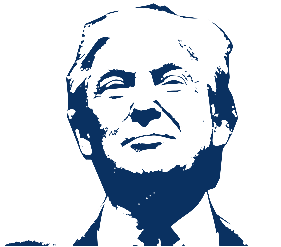
Trump: The Parody Years
Before becoming president, Donald Trump was widely viewed as a walking caricature of American excess—flamboyantly wealthy, loud, shallow, and relentlessly fame-obsessed. He embodied a uniquely garish version of the American Dream, where success was measured by gold-plated skyscrapers, tabloid marriages, and a constant presence in the media spotlight. For decades, satirists across genres—from children's television to late-night comedy, comic strips, and animated sitcoms—used Trump as a shorthand for corporate greed, unchecked ego, and the absurdities of celebrity capitalism. His persona became a cultural symbol: the brash billionaire who said the quiet part out loud, who branded everything he touched, and who seemed impervious to embarrassment. Whether through Sesame Street’s trash-loving Grouch parodies, Doonesbury’s sardonic comic-strip skewering, or The Simpsons’ eerily prescient vision of a Trump presidency, he was portrayed as both laughable and menacing. This decades-long portrayal laid the groundwork for how comedians and commentators would respond to his political rise—not with surprise, but with a grim sense of continuity. To many observers, Trump didn't transform into a political figure; he simply took his long-running performance to a new stage, blurring the lines between satire and reality.

Woody Guthrie wrote a song about Trump's father and his racist housing policies
In a 2016 article, Professor Will Kaufman discusses a newly uncovered song by folk legend Woody Guthrie that continues his sharp criticism of Fred C. Trump, father of Donald Trump and landlord of the Beach Haven housing project in Brooklyn, where Guthrie lived in the early 1950s. Guthrie condemned Trump for racist housing policies that excluded Black tenants and for exploiting tenants financially, particularly war veterans like himself. Guthrie’s lyrics, including the refrain “Trump made a tramp out of me,” reflected his anger at being overcharged in a public housing project and his disgust at the enforced racial segregation. The article places this in the context of Guthrie’s declining health due to Huntington’s disease, diagnosed in 1952, which led to the breakdown of his marriage and eventual departure from Beach Haven.
The song’s tone mixes biting satire with personal grief and political outrage. Though Guthrie never wrote a piece titled “Old Man Trump,” that title was later used by musicians and journalists referencing his unpublished works. The article also connects these writings to contemporary efforts to protect Guthrie's legacy—especially “This Land Is Your Land”—from misuse by figures like Donald Trump.
Sesame Street mocked Donald Trump through parody characters.
For nearly 20 years, Sesame Street has subtly mocked Donald Trump through parody characters like Donald Grump and Ronald Grump—Grouches with exaggerated egos, flashy style, and an obsession with trash and real estate, serving as clear satirical jabs at Trump’s persona and background. Donald Grump, introduced in 2005, spoofed Trump’s reality show The Apprentice by hosting a Grouch version of the contest, declaring himself the trashiest of all, and famously dismissing Elmo with a Trump-style “You’re fired!” An earlier version, Ronald Grump, appeared in the 1980s trying to build “Grump Tower” on Sesame Street by tricking Oscar the Grouch. This long-running satire resurfaced in public discussion after President Trump announced plans to defund PBS and NPR, citing "wokeness" as the reason, with many speculating that the move was at least partly driven by personal offense over Sesame Street’s enduring parody. Despite the threat of funding cuts, Sesame Street has continued its tradition of playful yet pointed commentary, reinforcing its role in cultural critique—even when it ruffles feathers in high places.