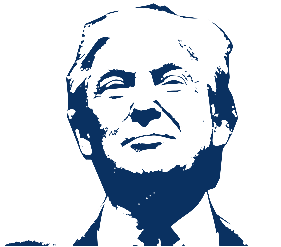
Brendan Carr
Chairman of the Federal Communications Commission (FCC)
Brendan Carr, born in 1979, is an American attorney and the current Chairman of the Federal Communications Commission (FCC) since January 2025. He has been an FCC commissioner since 2017 and previously served as the agency's general counsel and an aide to Commissioner Ajit Pai. Before his government service, he worked in private practice as a telecommunications attorney.
Carr is known for his opposition to net neutrality, advocacy for changes to Section 230, and strong stance against TikTok on national security grounds. He opposes content moderation by digital platforms and has called for punitive actions against broadcasters he views as biased against Donald Trump or Republicans. He contributed to the Heritage Foundation’s Project 2025 policy blueprint and has been unusually outspoken for a regulatory official, including publicly criticizing Democratic lawmakers.

Carr wrote the chapter on FCC Priorities
Federal Communications Commission Chairman Brendan Carr played a key role in contributing to the Heritage Foundation’s Project 2025, a conservative policy blueprint aiming to reshape the federal government. While still an FCC commissioner, Carr was approached in 2022 by former FCC staff and Heritage officials to author a chapter on FCC priorities. Emails obtained through a FOIA request show Carr promptly sought and received ethics clearance from FCC attorneys, who determined his unpaid participation wouldn’t violate the Hatch Act or IRS rules, provided he wrote in his personal capacity and didn’t use his official title or access non-public information.
Reining in Big Tech
Carr’s chapter in the 922-page document focused on reining in Big Tech and restoring conservative priorities at the FCC. Though Trump publicly distanced himself from Project 2025 during his campaign, his administration later embraced several of its policies and placed contributors in key positions. Democrats raised concerns about Carr's involvement, accusing him of leveraging his official position for partisan gain. Nonetheless, the released documents show internal FCC discussions portrayed the project as a nonpartisan policy roadmap, and ethics officials approved Carr’s participation with specific limitations. After Trump’s election win, Carr publicly supported the new administration’s direction and was soon tapped to lead the FCC.
Carr opposes net neutrality.
What is Net Neutrality?
Net neutrality is the principle that internet service providers (ISPs) must treat all online content equally, without blocking, throttling, or giving preferential treatment to specific websites, applications, or services. Under net neutrality, ISPs cannot charge content providers for faster delivery speeds or prioritize certain traffic over others. The goal is to maintain an open and fair internet where users have equal access to all information and services, regardless of source or type. Critics argue that regulation stifles innovation, while supporters say it's essential for protecting consumer rights and promoting competition.
The end of Net Neutrality
The recent appeals court decision limiting the FCC’s authority has effectively ended federal net neutrality rules, and incoming FCC Chairman Brendan Carr is expected to solidify that shift. Carr, a long-time FCC official and Trump ally, is planning to roll back Biden-era net neutrality policies, signaling a broader deregulatory agenda. Jonathan Spalter, CEO of U.S. Telecom, supported the move, claiming that the open and free internet has thrived without net neutrality regulations and that no credible complaints of throttling or unfair treatment by providers have been substantiated. He argued that government regulation is outdated in this context and that the broadband market, driven by consumer choice and innovation, should regulate itself.
Carr wants to weaken the Communications Decency Act.
What is the Communications Decency Act?
The Communications Decency Act (CDA) is a U.S. law passed in 1996 as part of the broader Telecommunications Act. Its main purpose was to regulate obscene or indecent content on the internet, especially to protect minors. However, its most well-known and impactful provision is Section 230, which has become a cornerstone of internet law.
Section 230 states that online platforms (like social media sites, forums, or websites) are not legally responsible for content posted by their users. It also gives them the freedom to moderate or remove harmful or offensive content without being treated as publishers or speakers of that content. In short, the CDA—particularly Section 230—allows the internet to function with user-generated content while protecting platforms from being sued over everything users say or do online. It's often summed up as: "Platforms aren't liable for what users post, and they can moderate content as they see fit."
How Carr would change it:
As FCC Chairman, Brendan Carr has expressed a strong desire to weaken Section 230 of the Communications Decency Act. Despite the FCC lacking jurisdiction over social media companies like TikTok, Carr has signaled intentions to stretch the agency's authority in an effort to regulate online speech and dismantle these protections. His actions align with his “Delete, Delete, Delete” initiative, aimed at stripping down consumer protections and regulatory oversight—moves critics say serve corporate interests more than the public. Carr’s push to reinterpret Section 230 marks a sharp ideological reversal from his earlier stance during Trump’s first term, when he denounced broad FCC regulatory actions (like net neutrality and broadband privacy rules) as overreach. Now, critics like Gigi Sohn warn that Carr is poised to aggressively test the limits of FCC power over internet governance and speech moderation—risking legal pushback akin to the Loper Bright precedent limiting agency authority.
Carr has weaponized his position at the FCC
Carr's reign of terror is terrorizing news networks who dare speak out against Trump's authoritarian regime.
When Donald Trump began his second term, Brendan Carr was appointed Chairman of the FCC. Since then, Carr has used his position to launch investigations, threaten broadcasters, and intervene in media mergers—all in ways that critics argue punish press outlets critical of Trump. These actions have raised significant concerns about government retaliation against journalists and undermining First Amendment protections. Commissioner Anna Gomez even reported that newsrooms are warning reporters to tread carefully due to fear of political retribution.
Examples of Carr's Abuses of Power:
Punishing CBS: Targeted 60 Minutes for editing an interview with VP Kamala Harris; demanded transcripts and tied the matter to a merger review of CBS’s parent company.
Harassing ABC: Resurrected complaints against ABC for fact-checking Trump during a debate, ignoring past dismissals that defended press independence.
Threatening NBC: Accused NBC of violating equal time rules after Harris appeared on SNL, despite knowing Trump received equal airtime. Suggested license revocation.
Targeting Public Media: Opened investigations into NPR and PBS and urged Congress to eliminate CPB funding—moves seen as attempts to silence independent journalism.
Intimidating KCBS Radio: Questioned the station’s news content about ICE actions, using a formal FCC inquiry that quickly disappeared amid Senate scrutiny.
Investigating DEI Programs: Launched FCC investigations into Comcast and Verizon’s diversity efforts, calling them discriminatory and linking them to pending mergers.
Pressuring Social Media: Despite lacking authority, Carr pressured platforms to stop moderating content, opposed compliance with European regulations, and pushed to strip protections under Section 230 to force them to host harmful content.
Carr’s accused Adam Schiff of running a “secret and partisan surveillance machine” and believes media is biased against conservative views.
Brendan Carr, in 2020, had aligned himself closely with Donald Trump by adopting aggressive rhetoric against perceived liberal bias and prominent Democrats, including House Intelligence Chair Adam Schiff, whom he accused of running a “secret and partisan surveillance machine.” Carr’s media blitz, echoing Trump’s attacks on social media platforms and calls to weaken Section 230 of the Communications Decency Act, has won him praise from Trump and his allies. While Carr claims his advocacy centers on protecting free speech, critics argue he is politicizing the FCC and using his position to audition for a promotion by targeting Trump’s opponents and pushing partisan agendas. His approach marks a stark contrast to more traditional, low-profile commissioners like Mike O’Rielly and has raised concerns about the FCC becoming a tool for political retribution.
Brendan Carr killed company mergers over DEI policies.
FCC Chairman Brendan Carr has openly stated that the agency may block mergers and acquisitions involving companies that promote diversity, equity, and inclusion (DEI) policies, which he labeled as “invidious discrimination.” In a Bloomberg interview, Carr suggested that companies with DEI programs—such as Paramount Global and Verizon, both involved in pending mergers—may not receive FCC approval unless they dismantle such initiatives. This stance reflects a broader Trump-aligned effort to undermine DEI by framing it as discriminatory, despite evidence showing these programs enhance workplace productivity and inclusivity. Critics warn that Carr’s actions could force media companies to abandon DEI efforts, reducing diversity in newsrooms and entertainment—an outcome with potentially harmful impacts on how underrepresented communities are portrayed in American media.