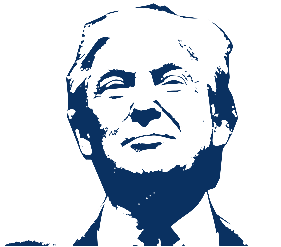
Marco Rubio
Secretary of State
Marco Rubio, currently serving as U.S. Secretary of State, has emerged as a highly controversial figure, drawing criticism for his foreign policy decisions and domestic actions. He has been barred from entering China and has also been a staunch critic of the Cuban Revolution, opposing efforts to normalize U.S.-Cuba relations . Domestically, he has faced scrutiny for aligning with authoritarian figures like Argentine President Javier Milei, whose economic policies and rhetoric have drawn comparisons to far-right populism. Additionally, Rubio has been accused of using his position to revoke visas from immigrants and students who criticize Israel, particularly those involved in pro-Palestinian activism on college campuses . He has described such campus protests as a "complete breakdown of law and order," further fueling debates about his approach to civil liberties and dissent .

Rubio scored a 0 out of 100 on the Human Rights Campaign Congressional Scorecard.
0 out of 100
The Human Rights Campaign PAC (HRC PAC) has strongly criticized Senator Marco Rubio ahead of his reelection bid, labeling him as out of touch with Florida voters due to his anti-LGBTQ+ and anti-abortion stance. He scored 0 out of 100 on HRC’s Congressional Scorecard, reflecting his opposition to LGBTQ+ rights, marriage equality, and nondiscrimination protections, as well as support for restrictive abortion laws and controversial rhetoric.
Anti LGBTQ+ Rights
Rubio has publicly opposed the Respect for Marriage Act, backed Florida's "Don't Say Gay or Trans" law, and used anti-trans language in campaign ads. Polls show that most Floridians support LGBTQ+ rights and abortion access, contradicting Rubio’s positions.
Rubio vilified the Cuban Revolution
Rubio aligns himself with far-right leaders
Senator Marco Rubio has extended his deep hostility toward the Cuban Revolution across Latin America, turning his anti-Cuba stance into a broader campaign against leftist governments in the region. He has aligned himself with far-right leaders like Argentina’s Javier Milei and Brazil’s Jair Bolsonaro, while harshly criticizing progressive figures such as Brazilian President Luiz Inácio Lula da Silva and former Mexican President Andrés Manuel López Obrador, whom he called “an apologist for tyranny.”
Supports regime change efforts
Rubio has actively supported sanctions and regime change efforts in Venezuela, where he backed the failed recognition of opposition leader Juan Guaidó, and in Nicaragua, where he has pushed for U.S. intervention. He also urged sanctions on Bolivia after the prosecution of leaders involved in a deadly 2019 coup, and condemned Honduras for challenging U.S. influence following the election of democratic socialist President Xiomara Castro.
Willing to remove Latin American soveriegnity to fight Chinese influence
His primary concern now appears to be China’s growing economic influence in Latin America—a contrast to the U.S. approach, which Rubio continues to frame through Cold War-era ideology. By treating the region as the U.S.’s “backyard” and attacking governments that assert their independence, Rubio’s approach undermines Latin American sovereignty and risks pushing more countries away from the United States.
Rubio said that God has given Palestine to Israel
Defending Israel's genocide
Marco Rubio continues to strongly defend Israel despite the high civilian death toll in Gaza and widespread international condemnation of what many have called genocide. He claims that Israel takes "extraordinary steps to avoid civilian losses" and blames Hamas for using civilians as human shields, accusing them of not valuing human life. When asked about a ceasefire in November 2024, Rubio rejected the idea, saying, “I want them to destroy every element of Hamas… These people are vicious animals.”
Religious roots could isolate the United States
Rubio has also opposed President Biden’s limited attempts to restrain Israel. He compared Biden’s plea not to invade Rafah to telling the Allies not to attack Berlin in World War II. He criticized U.S. sanctions on violent Israeli settlers in the West Bank, instead placing full blame for the lack of peace on the Palestinians and defending Israeli settlers as "rightfully living in their historic homeland." Rubio's support for Israel is rooted in a religious-historical narrative that no other country accepts as a basis for modern borders. Critics warn that if Rubio pushes this view as official U.S. policy, it could further isolate the United States globally.
Rubio believes immigrants who criticize Israel should not be allowed to get a visa.
Students cannot publicly criticize Israel's military actions
Marco Rubio announced a new policy to deny visas to foreign officials who censor American social media posts, saying it defends free speech and U.S. sovereignty. However, Rubio himself has faced criticism for revoking U.S. visas from individuals—primarily students—who have publicly criticized Israel’s military actions in Gaza.
Rumeysa Ozturk
One notable case involves Rumeysa Ozturk, a Turkish doctoral student at Tufts University, who was detained after writing a critical article about the university’s stance on Gaza. Rubio has claimed to revoke thousands of visas under this policy, raising concerns that his actions disproportionately target pro-Palestinian voices under the pretext of combating censorship abroad.
Rubio is barred from visiting China.
China hawk
China's continued sanctions on newly appointed U.S. Secretary of State Marco Rubio — a known China hawk — have stirred widespread speculation on Chinese social media about whether he will become the first U.S. diplomat in that role barred from visiting China. Rubio has a long record of criticizing China's human rights abuses and global influence, earning him multiple sanctions from Beijing in 2020. Now, with no clear signal from the Chinese government about lifting those sanctions, online debate is mounting about how diplomatic relations will proceed. Some Chinese netizens have joked about the situation, and rumors have circulated that China changed the Chinese translation of Rubio’s name to save face if sanctions are quietly lifted — though official records show multiple versions have long been used.
Rubio said that pro-Palestinian protests on college campuses are a "breakdown of law and order".
Antisemitic Zombies
Sen. Marco Rubio (R-Fla.) criticized pro-Palestinian protests on U.S. college campuses, calling them a “complete breakdown of law and order” and blaming a small group of what he called “antisemitic zombies” for disrupting campus life. He argued that these students have been indoctrinated for years and are now interfering with the education and safety of the broader student body, especially during finals.
Praised law enforcement that cleared peaceful protests
Rubio said the protesting students should be held accountable and praised law enforcement in New York and California for forcefully clearing campus encampments. His remarks came ahead of President Biden’s statement, where Biden condemned violence and vandalism but defended peaceful protest as a democratic right.